Thesus
One submission. Four analyses.
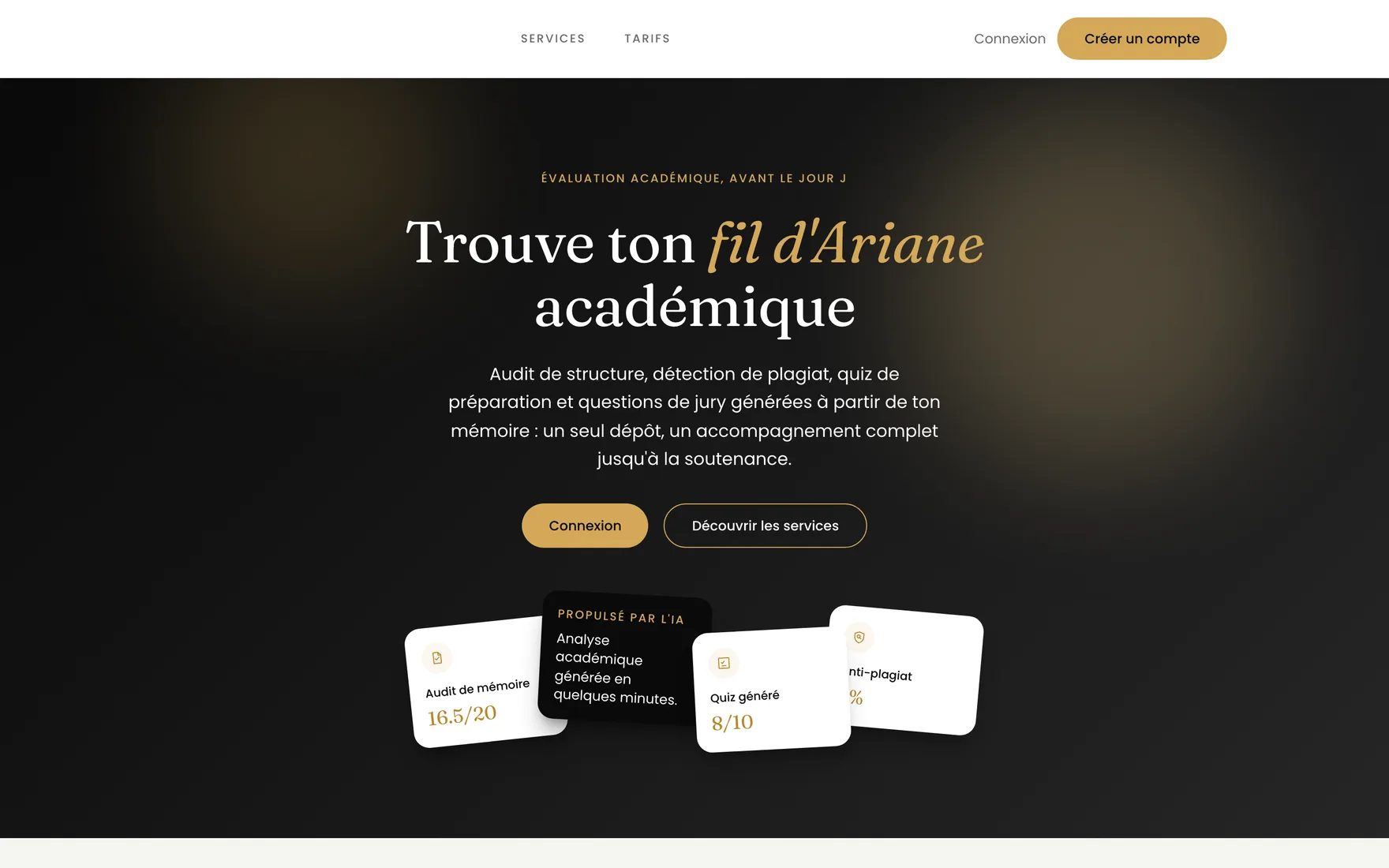
Academic assessment platform: structure audit, plagiarism detection with a verifiable certificate, preparation quizzes and jury simulation generated from the submitted thesis. Three distinct spaces for the institution, the student and the jury.
- Reference
- LF-2026-03
- Sector
- Higher education · Quality assurance
- Period
- 2026
- Technologies
- Next.js · React · TypeScript · Tailwind CSS · PostgreSQL · Prisma · IA générative · Vercel
- segregated spaces
- 3segregated spaces
- analyses per submission
- 4analyses per submission
- single submission
- 1single submission
- verifiable certificate
- QRverifiable certificate
Context
In most institutions, assessing a thesis depends on a supervisor's availability and on a jury discovering the document late. Plagiarism detection, where it exists, is a separate service. The student arrives at the defence without knowing what they will be asked.
Challenge
The problem is not producing a grade. It is making four requirements that normally live in four separate tools converge on a single submission: judge the structure, measure originality, train the student and equip the jury. And to do so without multiplying submissions, which immediately kills adoption.
Response
A single submission — PDF or Word — triggers four processes. The audit returns a mark out of 20 with recommendations on structure, argumentative coherence and writing quality. Plagiarism detection compares against a base of academic publications and produces a report and a QR-verifiable certificate. A personalised quiz — multiple choice, true/false, cloze — is generated from the thesis's actual content. Finally, a jury simulation proposes the questions a panel would ask about this specific document. Three segregated spaces share these results: the institution validates topics and assigns juries, the student prepares, the jury assesses on an assisted grid.
Capabilities
Thesis audit marked out of 20
Structure, argumentative coherence and writing quality examined, with concrete recommendations rather than an opaque score.
Plagiarism check and QR certificate
Comparison against a base of academic publications, detailed report and QR-verifiable certificate — checkable by a third party without going through the platform.
Quiz generated from the thesis
Multiple choice, true/false and cloze exercises built from the content actually submitted. The student self-assesses on their own work, not on a generic corpus.
Jury simulation
The questions a jury could ask, generated from the thesis, so the defence holds no surprises.
Institution steering
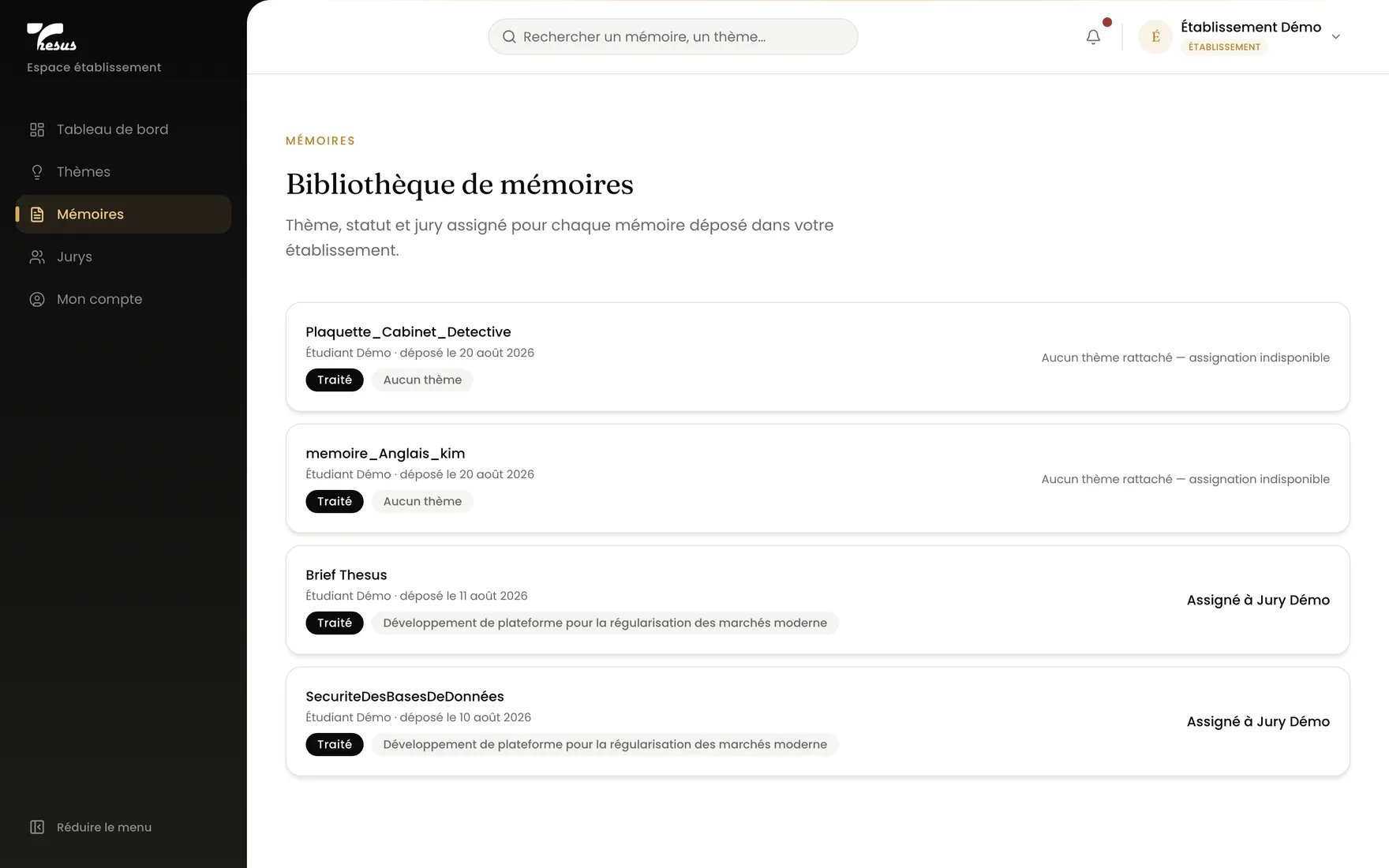
Student import, validation of proposed topics, library of submitted theses, jury assignment and tracking of upcoming defences.
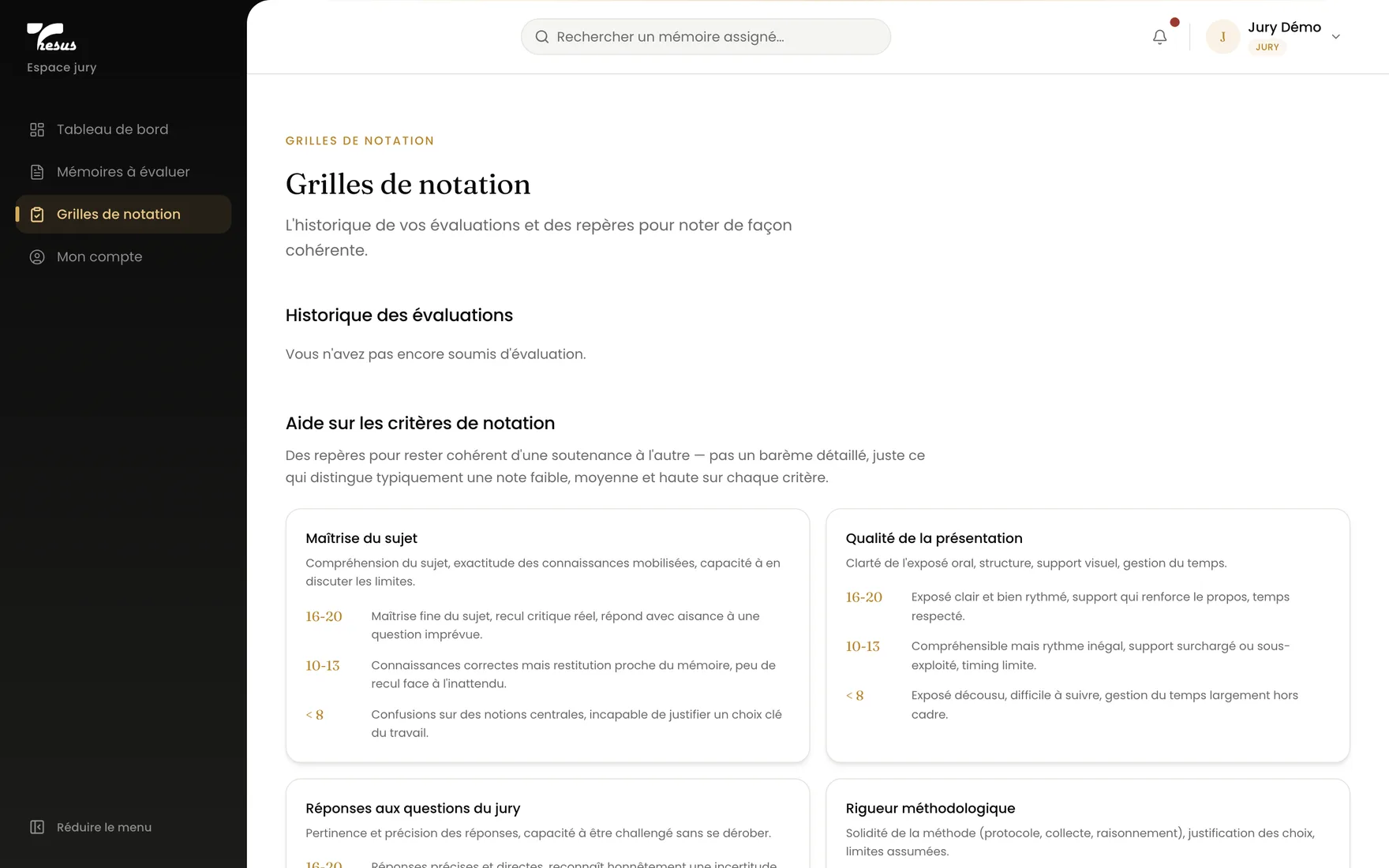
Assisted marking grids
The jury has ready-to-use questions and a structured grid. They record their assessment in the same space as the document.
Roles
Institution
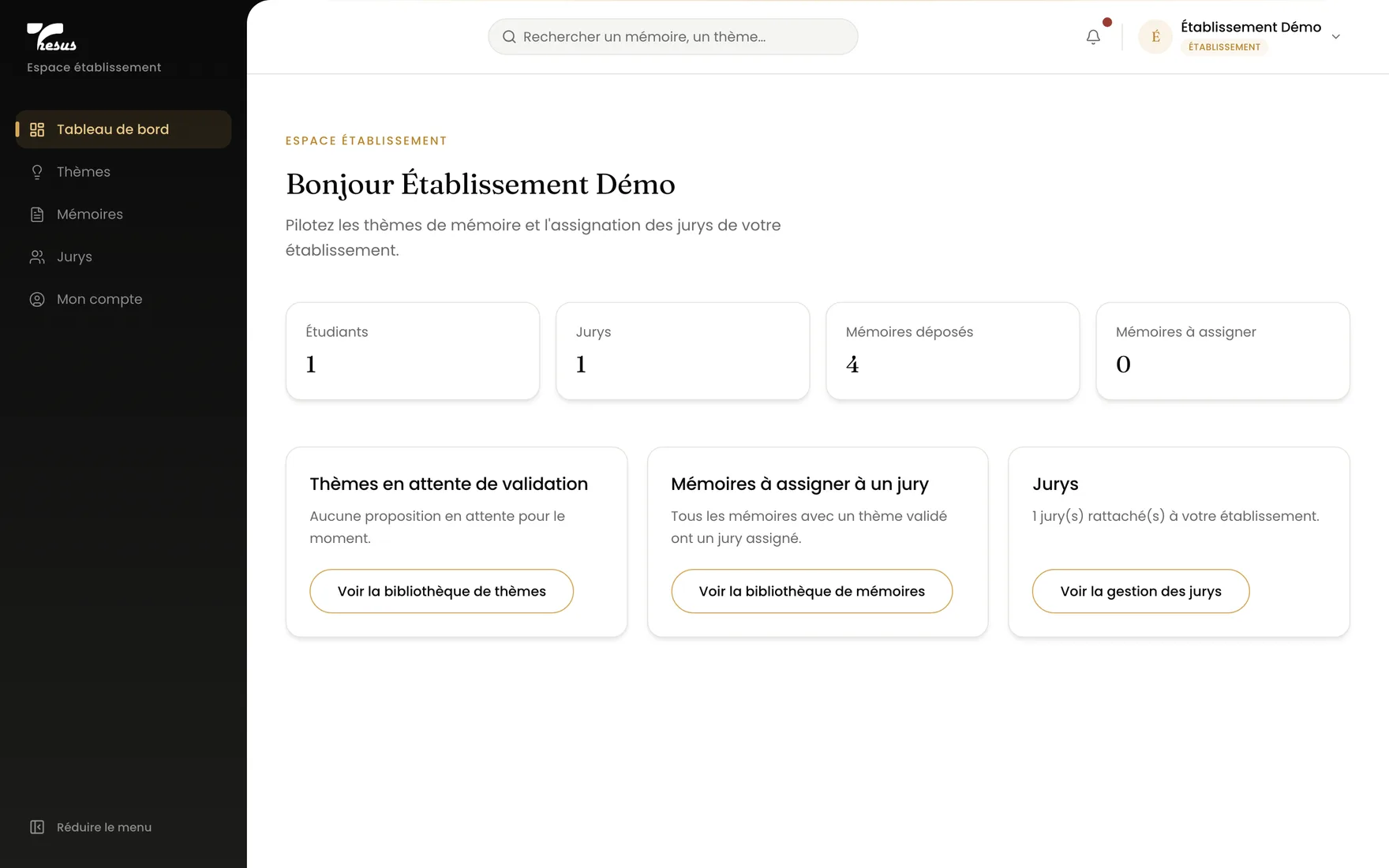
Steers topics, theses, juries and students. Sees what has been submitted, what remains to be assigned and what awaits validation.
Student
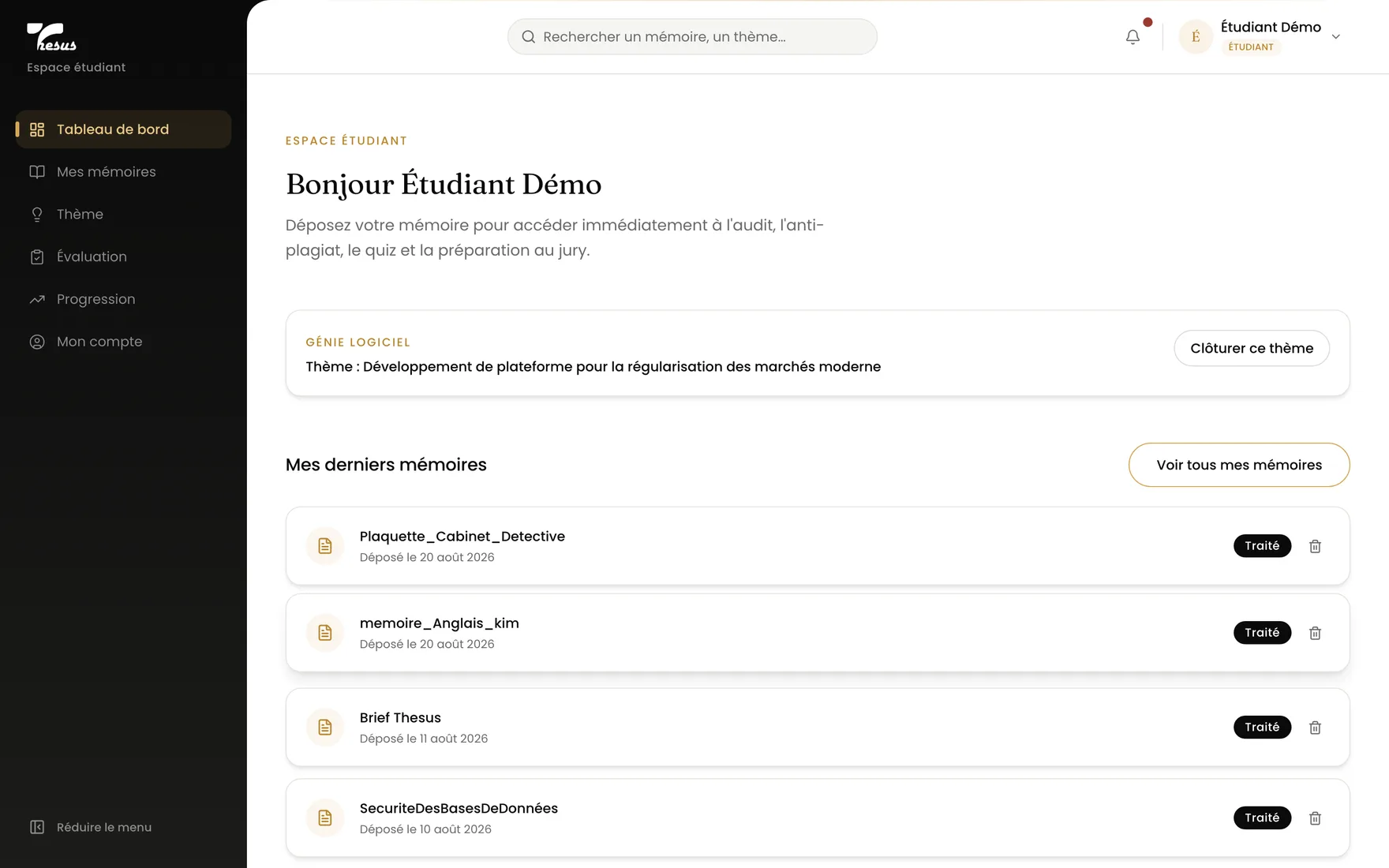
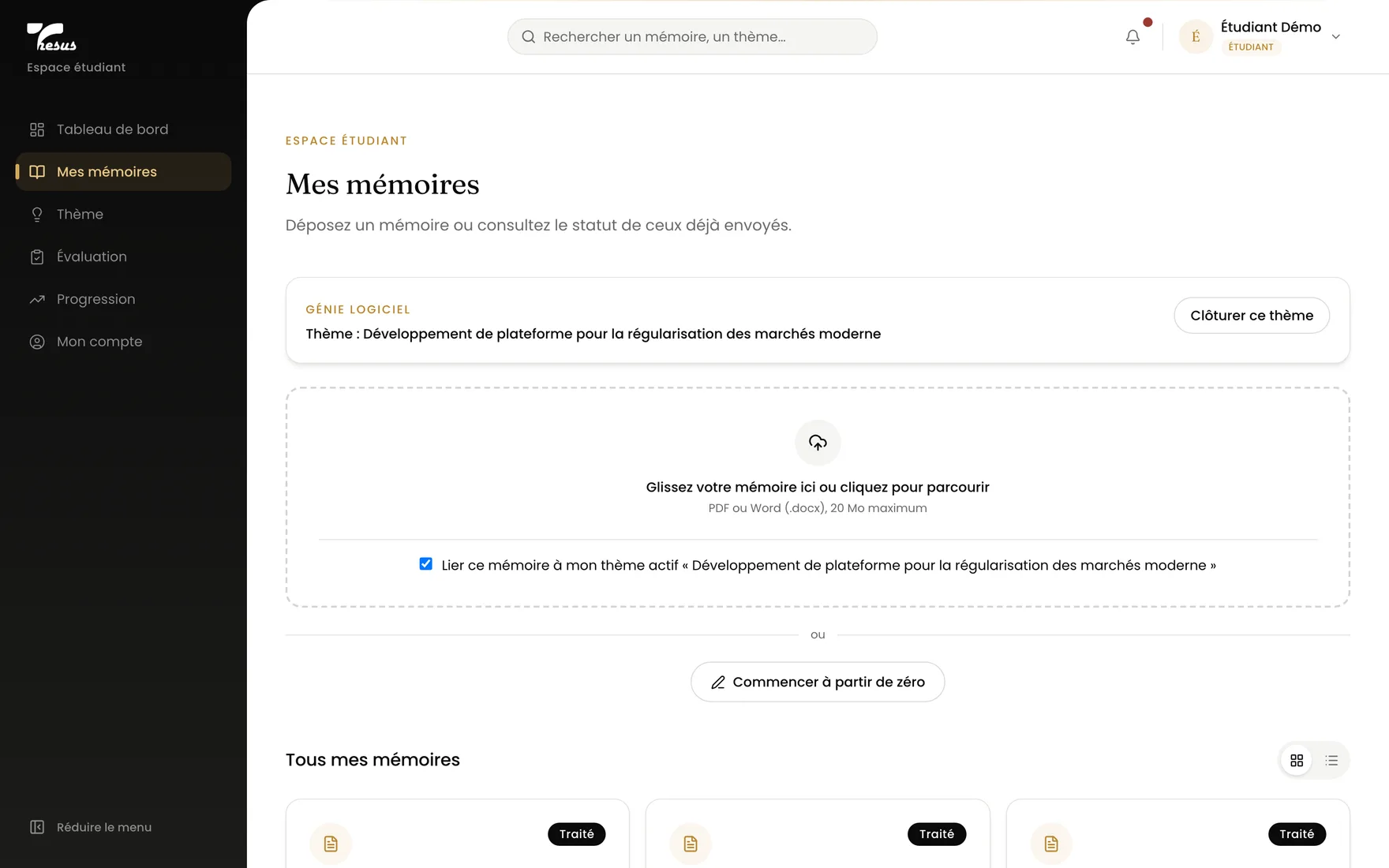
Submits their thesis, follows their topic, accesses the audit, plagiarism check, quiz and jury preparation, and tracks their progress.
Jury
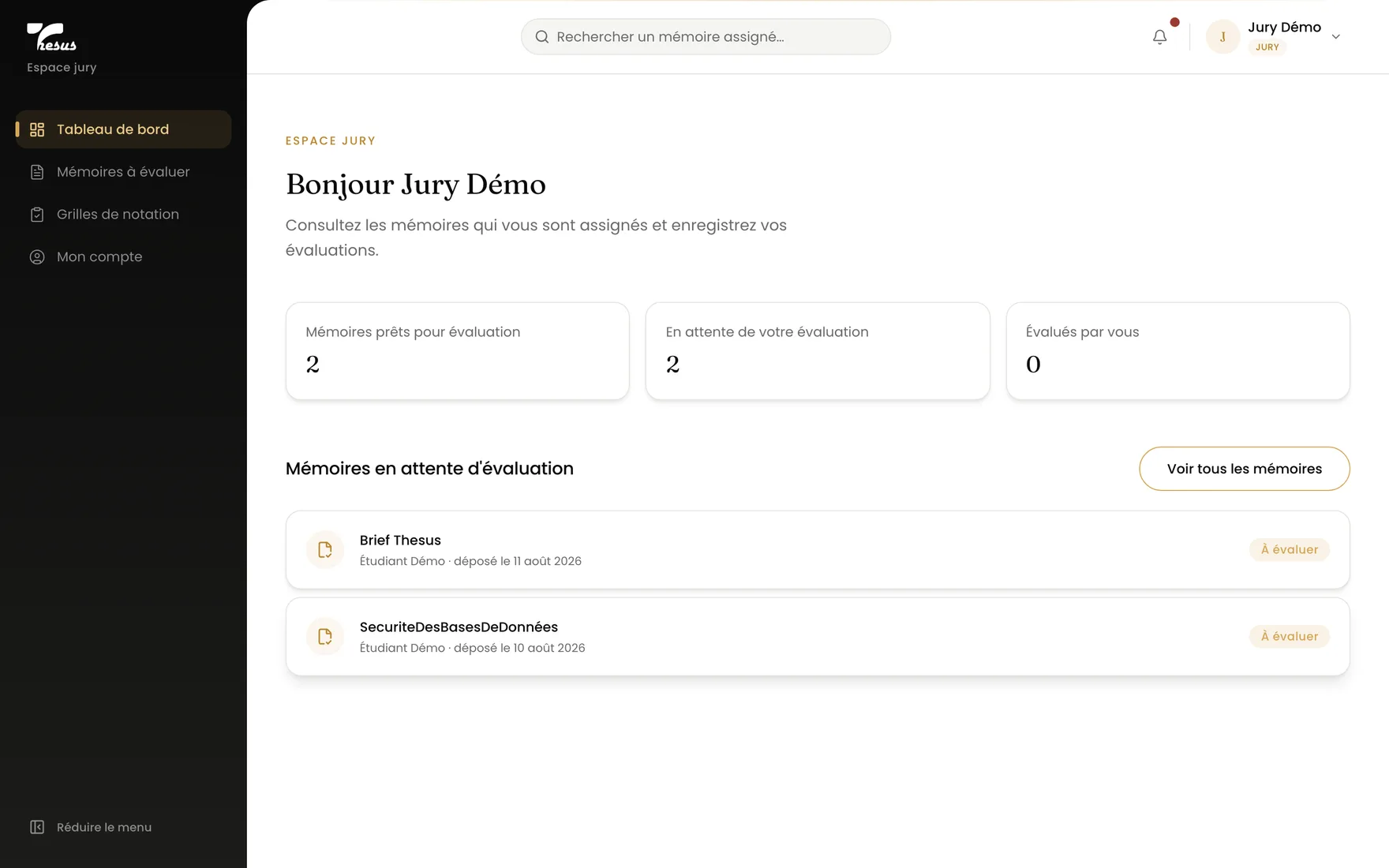
Receives the theses assigned to them, has the generated defence questions at hand, and records assessments on the grid.
In operation
Screenshots taken from the real application.
Outcomes
- Four analyses from a single submission, in minutes.
- A plagiarism certificate a third party can verify by QR code.
- A jury that arrives with its questions already prepared.
- A student who rehearses on their own thesis before the defence.
Demonstration access
All three spaces — institution, student and jury — are opened on request, on a set of demonstration theses. We create a named, time-limited account.
Answered within two business days.